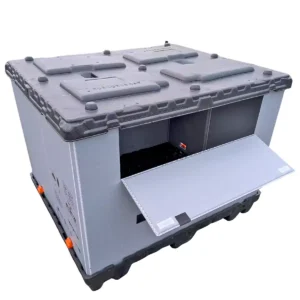
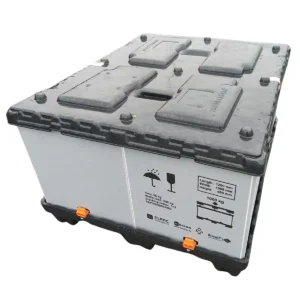
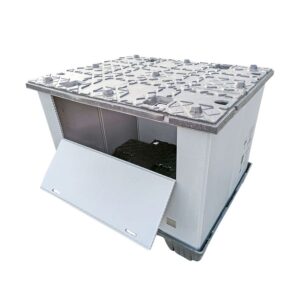
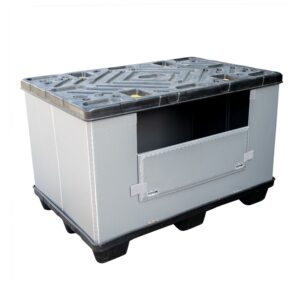
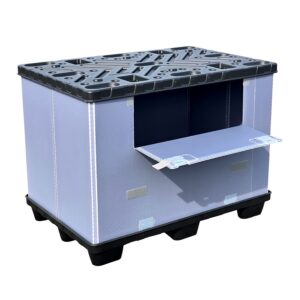
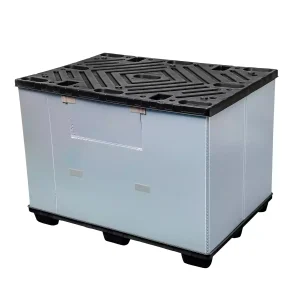
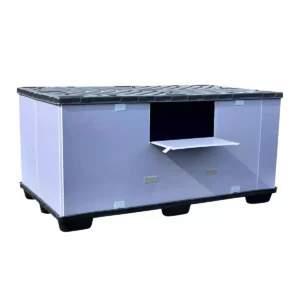
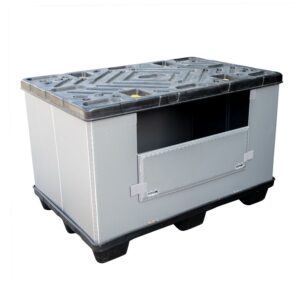
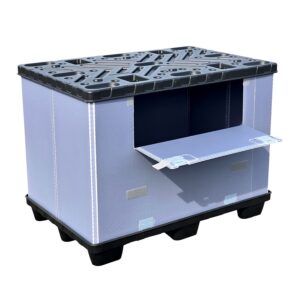
Ontdek ons assortiment sleeve pack palletdozen, ontworpen om retourvolumes te verminderen en de efficiëntie van de behandeling te verbeteren. Verkrijgbaar in meerdere maten, laadvermogens en configuraties.
Een offerte aanvragen is vrijblijvend – zodat u snel de kosten & het besparingspotentieel kunt beoordelen.
Op zoek naar een dieper inzicht in sleeve pack systemen gids, inclusief kostenbesparingen, transportefficiëntie en industriële toepassingen? Bekijk onze volledige gids.
Veelgestelde vragen over sleeve packs:
1. Waarom stappen bedrijven over van verpakkingen met één laag op sleeve-verpakkingen?
Bedrijven stappen over op sleeve packs om terugkerende verpakkingskosten en transportinefficiënties te verminderen. In tegenstelling tot wegwerpbare kartonnen of houten kratten, worden sleeve packs meerdere keren hergebruikt en nemen ze aanzienlijk minder ruimte in beslag wanneer ze leeg zijn, wat de retourtransportkosten verlaagt en verpakkingsafval vermindert.
2. Hoeveel ruimte kan er worden bespaard bij het retourneren van lege mouwamulsies?
In opgevouwen toestand nemen sleeve-verpakkingen doorgaans in tot een fractie van hun volledige volume. De vouwverhouding bedraagt
5:1 - 6:1. Hierdoor kunnen er in één retourzending veel meer lege verpakkingen worden vervoerd
in vergelijking met harde verpakkingen, waardoor ze zeer efficiënt zijn in gesloten logistieke systemen.
3. Zijn sleeve pack-systemen geschikt voor geautomatiseerde verwerking?
Ja, sleeve pack systemen kunnen geconfigureerd worden voor geautomatiseerde of semi-geautomatiseerde omgevingen. Met het juiste basisontwerp (zoals runners of skids) en consistente afmetingen integreren ze goed in transportsystemen, robotica en gestandaardiseerde magazijnprocessen.
4. Wanneer zijn sleeve packs NIET de juiste oplossing?
Sleeve-pack-systemen zijn het meest effectief in een gesloten logistieke kringloop met regelmatige retourstromen.
Ze zijn mogelijk minder geschikt in situaties waarin verpakkingen slechts eenmalig worden gebruikt, retourtransport
niet kan worden georganiseerd, of wanneer er behoefte is aan goede ventilatie of volledig zicht op de lading.
In dergelijke gevallen kunnen alternatieve oplossingen, zoals wegwerpverpakkingen of gaascontainers,
geschikter zijn.
Door zowel de voordelen als de beperkingen te evalueren, kunt u de juiste verpakkingskeuze maken voor
uw specifieke toepassing.
5. Welke vragen moet ik beantwoorden om het juiste model voor de sleeveverpakking te bepalen?
Het kiezen van het juiste sleeve pack model hangt meestal af van een beperkt aantal praktische parameters die verband houden met uw product en logistieke opzet. De belangrijkste vragen om te overwegen zijn:
✓ Wat zijn de productafmetingen?
lengte, breedte en hoogte bepalen de benodigde voetafdruk en de hoogte van de sleeve.
✓ Wat is de totale belasting per eenheid?
bepaalt de vereiste belastingscapaciteit en materiaalkracht.
✓ Hoe zullen de eenheden worden gestapeld?
zowel tijdens transport als in opslag, wat de dynamische en statische belastingsvereisten beïnvloedt.
✓ Hoe vaak en over welke afstand worden lege eenheden teruggebracht?
bepaalt hoe belangrijk de vouwverhouding en de ingestorte hoogte zijn voor besparingen op transportkosten.
Welke hanteringsmethoden worden gebruikt? handmatige hantering, gebruik van vorkheftrucks of automatisering vereisen mogelijk specifieke basisontwerpen of configuraties.
✓ Zijn er specifieke eisen zoals ESD, hygiëne of productbescherming?
relevant voor elektronica, gereguleerde industrieën of gevoelige componenten.
In de meeste gevallen is het beantwoorden van deze vragen voldoende om snel een geschikte standaardconfiguratie te definiëren, zonder dat er een volledig op maat gemaakte oplossing nodig is.
6. Wat is het rendement op investering (ROI) van sleeve pack-systemen?
De ROI van sleevepacksystemen komt voort uit twee belangrijke drijfveren: minder verpakkingsafval en lagere kosten per zending gedurende de tijd. Omdat sleevepacks herbruikbaar zijn, wordt de initiële investering gespreid over meerdere cycli in plaats van een terugkerende kostenpost te zijn zoals bij eenmalige verpakkingen. Bovendien vermindert hun compacte retourvolume de transportkosten aanzienlijk in gesloten logistieke ketens. In veel toepassingen is de investering binnen een relatief korte periode terugverdiend, waarna de doorlopende kosten voornamelijk beperkt blijven tot retourtransport en onderhoud. Een realistische ROI kan meestal snel worden geschat op basis van uw transportafstand en verzendvolume.