Foldable Packaging Summary – why you should read on?
Logistic packaging is often treated as a fixed cost or a purchasing detail. In reality, it has a direct and measurable impact on transport efficiency, warehouse utilisation, return logistics, and CO₂ emissions. This article explains how foldable packaging quietly improves competitiveness by reducing total logistics costs, increasing operational flexibility, and supporting sustainability goals – and why many companies still overlook this advantage.
Packaging pressure in modern supply chains
Industrial supply chains are under constant pressure. Transport rates remain volatile, warehouse space is expensive, labour availability is tight, and sustainability reporting is no longer optional. Yet one element often escapes strategic attention: packaging.
For many companies, packaging decisions were made years ago and simply carried forward. Rigid containers, just pallets with wrap foil, or one-way solutions continue to circulate – not because they are optimal, but because “they’ve always worked.”
The reality is simple: when volumes scale, small packaging inefficiencies scale with them. And that’s where competitiveness quietly erodes.
Why packaging directly affects competitiveness
Packaging is not neutral. It influences:
- How many products fit on a truck
- How much warehouse space is occupied – full and empty
- How fast goods are handled
- How often products are damaged
- How efficiently return flows are organised
In repetitive B2B logistics, these factors compound. A few cubic meters of wasted space per unit quickly translate into extra truckloads, additional storage locations, and higher handling costs.
Competitiveness in industrial markets is built on cost control, reliability, and flexibility. Packaging affects all three.
The hidden cost of rigid packaging
One of the biggest inefficiencies in traditional packaging lies in empty return transport.
Rigid pallet boxes and containers retain their full volume when empty. That means companies often transport “air” back to suppliers or production sites. The same applies to empty storage: valuable warehouse space is occupied by packaging that isn’t carrying any product.
Consider a simplified example:
- 1 rigid pallet box = approx. 1.3 m³
- 100 empty boxes = 130 m³ of warehouse space
- On a standard trailer, empty rigid boxes quickly limit loading capacity
These costs rarely appear as a single line item. They are spread across transport, warehousing, and handling – which makes them easy to underestimate.
What makes foldable packaging different
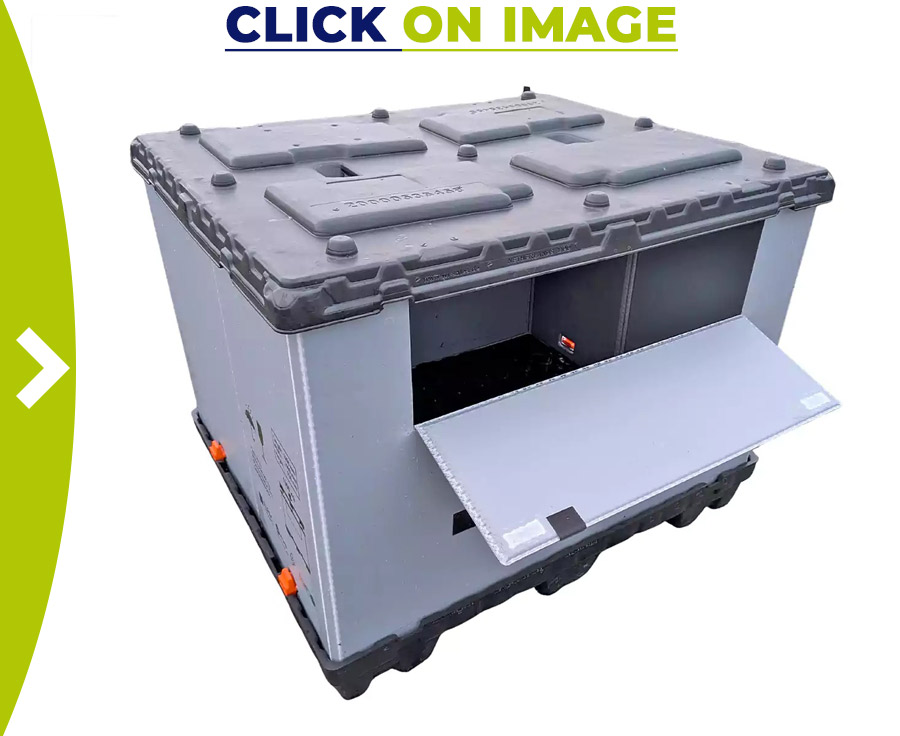
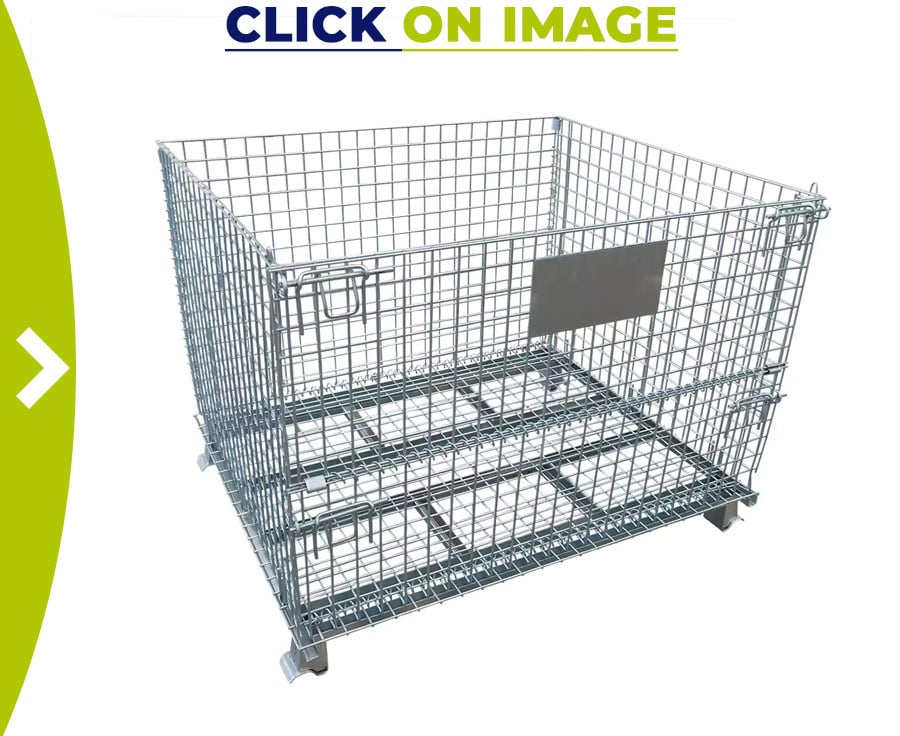
Foldable pallet boxes are designed to reduce volume when empty. Depending on design and material, fold ratios of 3:1 to 4:1 are common. When choosing specific models the fold ratio even goes up to 6:1 with sleeve packs and specific mesh wire pallet cages.
That means:
- 3–4 (and up to 6) empty foldable boxes can be returned in the space of one rigid box
- Warehouse space required for empty packaging can be reduced by up to 70–80%
- Return transports can often be consolidated into fewer truck movements
Importantly, modern foldable packaging is engineered for industrial use:
- Compatible with standard pallets and forklifts
- Suitable for automation and racking systems
- Designed for repeated use in closed-loop logistics
This makes foldable solutions a structural improvement, not a workaround.
Competitive advantages that follow
- Lower total logistics costs
When empty packaging volume drops, transport efficiency improves immediately. Fewer return trips are required, and truck capacity is used more effectively. Over a year, this can translate into double-digit percentage savings on return logistics.
Warehouse savings follow naturally. Less space for empty packaging means more room for value-adding inventory – or lower storage costs.
- Greater operational flexibility
Foldable packaging adapts better to fluctuating volumes. During peak periods, more packaging can be stored on-site without expanding warehouse capacity. During low demand, empty units don’t become a burden on space.
This flexibility is especially valuable in:
- Seasonal production
- Automotive and industrial manufacturing
- International and cross-border supply chains
- Improved sustainability performance
Transporting fewer empty volumes directly reduces CO₂ emissions. Many companies see measurable emission reductions per cycle simply by optimizing packaging.
In addition, reusable foldable packaging replaces single-use alternatives and simplifies ESG reporting by making logistics flows more transparent and consistent.
Why this advantage is often overlooked
If the benefits are so clear, why isn’t foldable packaging standard everywhere?
Common reasons include:
- Packaging evaluated on unit price, not total cost of ownership (TCO)
- Responsibility split between purchasing, logistics, and operations
- Existing packaging considered “good enough”
- Lack of data on empty movements and return flows
As a result, packaging remains tactical – while its impact is strategic.
When foldable packaging delivers the highest ROI
Foldable packaging creates the most value in supply chains with:
- Repetitive transport loops
- High return volumes of empty packaging
- Limited warehouse space
- Medium to Long-distance transport
- High product value or damage sensitivity
In these environments, even small efficiency gains produce visible financial results. ROI’s in less than 12 months are not uncommon.
From product choice to packaging strategy
Choosing a foldable pallet box is not just a product decision. It is part of a broader packaging strategy that includes:
- Flow analysis
- Load optimisation
- Lifecycle costing
- Compatibility with handling and storage systems
This is where many companies unlock the real advantage: not by changing a box, but by rethinking how packaging supports the entire logistics system.
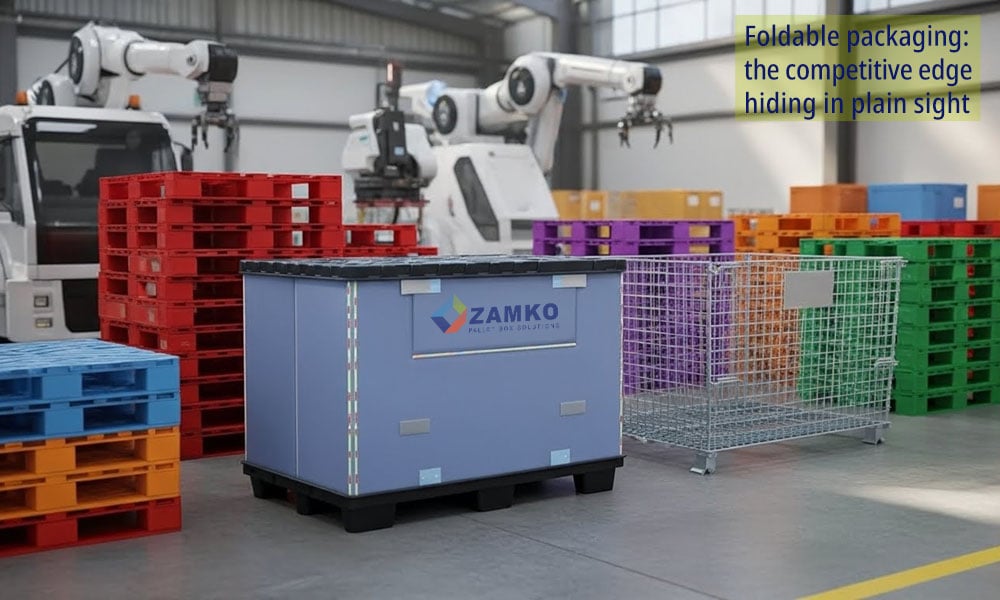
Conclusion: an edge hiding in plain sight
Foldable packaging is not new technology. Yet its strategic value is often underestimated.
In competitive industrial markets, marginal gains matter. Reducing empty transport, freeing warehouse space, and improving flexibility are not abstract benefits – they are measurable contributors to performance.
The leading example of foldable industrial packaging is the sleeve pack system.
For companies willing to look beyond unit price and rethink packaging as part of logistics optimization, the competitive edge may already be there – hiding in plain sight.
Table of Contents
Toggle