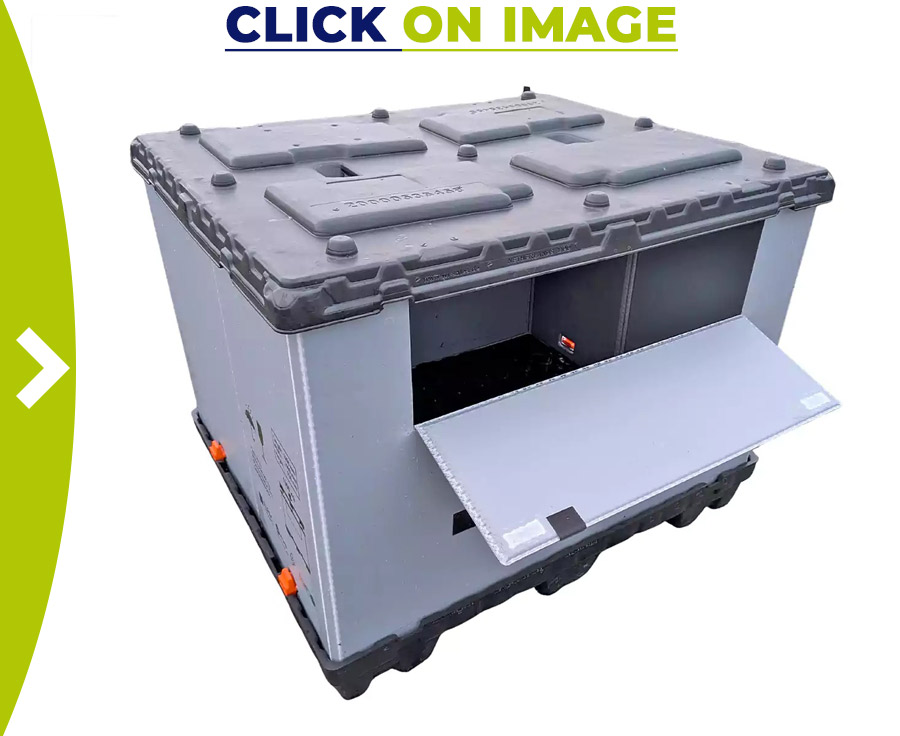

Why Lifecycle Analysis Matters in Industrial Reusable Packaging
LCA for Industrial Reusable Packaging. Lifecycle Analysis (LCA) has become a central decision-making tool in industrial logistics and packaging management. For reusable industrial packaging-such as plastic pallet boxes, plastic sleeve packs, and steel mesh wire pallet cages-LCA provides a structured method to evaluate environmental impact across the entire lifecycle, rather than focusing only on purchase price or end-of-life recycling.
In the context of rising regulatory pressure, ESG reporting requirements, and volatile raw material prices, LCA enables companies to make data-driven packaging decisions. It allows procurement, logistics, and sustainability teams to align on measurable outcomes such as CO₂ reduction, waste prevention, and total cost of ownership.
What Is Lifecycle Analysis (LCA)?
Lifecycle Analysis is a standardised methodology defined under ISO 14040 and ISO 14044. It quantifies the environmental impact of a product or system across all lifecycle stages:
- Raw material extraction
- Manufacturing and processing
- Transport and distribution
- Use phase, including reuse and repair
- End-of-life treatment such as recycling or disposal
For reusable industrial packaging, the use phase is particularly important. Because products remain in circulation for many years, the number of reuse cycles and repair interventions strongly influences overall impact.
Why LCA Is Particularly Relevant for Reusable Packaging
Reusable transport packaging differs fundamentally from single-use packaging. Its environmental footprint cannot be assessed accurately without considering time, handling behavior, and logistics design. A single pallet box or mesh cage may replace dozens or hundreds of single-use alternatives.
Key reasons LCA is essential include:
- Production impact is distributed across many reuse cycles
- Repair extends functional lifespan and delays recycling
- Return logistics influence transport-related emissions
- End-of-life recycling quality determines circularity performance
Without LCA, organizations risk drawing incorrect conclusions based on initial CO₂ emissions alone.
Critical LCA Parameters for Industrial Reusable Packaging
Across plastic pallet boxes, sleeve packs, and steel mesh wire cages, a limited set of parameters dominates LCA outcomes.|
The five most influential factors are:
- Number of reuse cycles achieved in practice
- Frequency and effectiveness of repairs
- Transport distances, especially empty returns
- Load efficiency and space utilisation
- Recycling efficiency at end of life
Optimising these parameters typically yields greater environmental benefits than marginal material changes.
Material-Specific LCA Considerations
Plastics such as HDPE and PP are widely used in reusable packaging due to their durability, impact resistance, and recyclability. Their LCA performance improves significantly when reuse cycles exceed defined break-even points.
Steel mesh wire pallet cages offer very long service lives, often exceeding 15 years. Steel recycling requires substantially less energy than primary production and retains material quality. However, higher weight increases transport emissions, making utilization rate and lifespan critical factors.
LCA, Regulation, and Compliance
European policy increasingly reflects lifecycle thinking. The Packaging and Packaging Waste Regulation (PPWR) prioritizes waste prevention and reuse over recycling. Companies must demonstrate that packaging systems are designed for durability, reuse, and material recovery.
LCA provides the quantitative foundation needed to justify packaging choices under regulatory scrutiny and during sustainability audits.
Business Value of LCA-Driven Packaging Decisions
From a business perspective, LCA is not only an environmental tool. It supports strategic decision-making by improving:
- Total cost of ownership calculations
- Investment justification for repair and pooling systems
- Alignment between ESG, procurement, and logistics
- Credibility of sustainability reporting
- Long-term operational resilience
Organisations that apply LCA consistently tend to standardise packaging, invest in repair capabilities, and reduce dependency on disposable materials.
LCA as a Foundation for Circular Logistics
Lifecycle Analysis is essential for understanding the true environmental and economic performance of industrial reusable packaging. For plastic pallet boxes, plastic sleeve packs, and steel mesh wire pallet cages, longevity, reuse, repair, and high-quality recycling determine real impact.
As sustainability expectations and regulatory requirements continue to intensify, LCA-based decision-making becomes a prerequisite for professional packaging management and circular logistics strategies.
Follow us and keep up with our news on our social media channels and business pages:
https://www.facebook.com/zamko.eu.palletboxes/
https://www.linkedin.com/company/zamko/
https://www.youtube.com/channel/UCXLPqlDXW8nLY2ainqglj2w
Table of Contents
Toggle