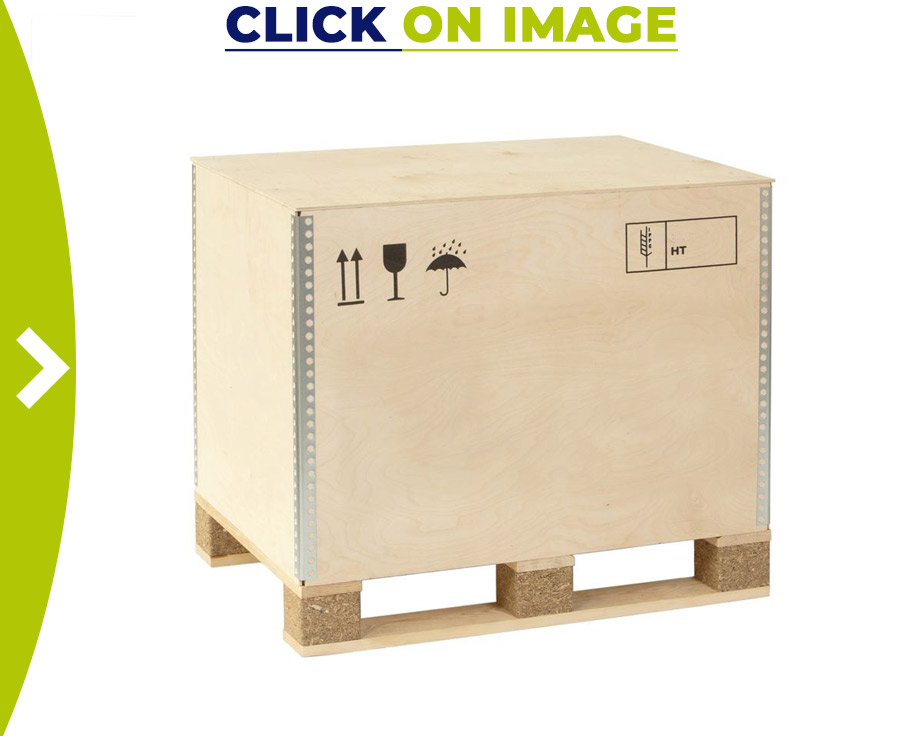
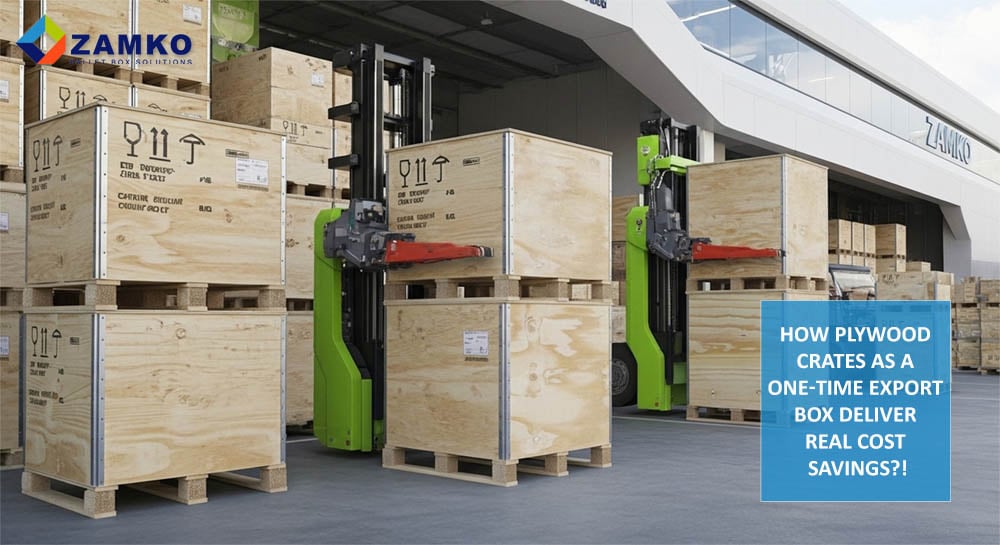
Plywood Crates as a One-Time Export Box
Plywood Crates as a One-Time Export Box – Perspectives? When companies evaluate export packaging, the discussion often starts-and ends-with unit price. Carton boxes usually appear to be the cheapest option, while plywood crates are seen as a more expensive alternative. However, focusing purely on purchase price ignores the real cost drivers in international transport: damage, claims, delays, customer dissatisfaction, and reputational risk.
In reality, using plywood crates as a one-time export solution can deliver an excellent return on investment (ROI). Despite a higher upfront cost, plywood crates frequently save money by preventing damage, protecting product quality, and ensuring goods arrive exactly as intended.
The Price Myth: Why “Cheapest Packaging” Is Often the Most Expensive Choice
At first glance, plywood crates are clearly more expensive than standard carton export boxes. This leads many exporters to assume they are unsuitable for one-way shipments. However, this assumption is misleading.
Export packaging should not be evaluated solely on material cost. Instead, it should be assessed on total landed cost, including:
- Product damage and replacement costs
- Transport insurance claims
- Administrative handling of complaints
- Production delays and re-shipments
- Loss of customer trust and future orders
When these factors are included, the apparent savings of carton packaging often disappear very quickly.
Structural Integrity: Plywood Crates Keep Their Shape Under Load
One of the most important advantages of plywood crates is their structural stability. Unlike carton boxes, plywood crates do not deform under stacking pressure or uneven loads.
During export transport-especially in containerized shipping-packages are exposed to:
- Heavy stacking loads
- Long periods under compression
- Mechanical handling with forklifts and cranes
Plywood crates maintain their geometry throughout the journey. This consistent structure prevents internal shifting, reduces stress on the packed goods, and ensures that products remain properly supported from origin to destination.
Higher Load Capacity Means Better Protection for Heavy and Valuable Goods
Plywood crates offer a significantly higher load capacity than carton packaging. This makes them ideal for:
- Heavy machinery and components
- Industrial parts with concentrated loads
- High-value or fragile equipment
Carton boxes often reach their limits quickly under real export conditions. Once overloaded, they lose strength rapidly, increasing the risk of collapse or internal damage. Plywood crates, by contrast, are engineered to distribute weight evenly and withstand demanding transport scenarios.
This higher load capacity translates directly into fewer damages and fewer customer complaints.
Resistance to Humidity and Ocean Transport Conditions
Ocean transport is one of the harshest environments for export packaging. High humidity, temperature fluctuations, and condensation can seriously compromise carton packaging.
Plywood crates are far more resistant to moisture:
- They retain their structural integrity in humid conditions
- They do not soften or collapse due to condensation
- They provide a stable barrier throughout long transit times
For overseas shipments, this moisture resistance alone can justify the higher cost of plywood crates. Damaged cartons caused by humidity often result in product damage-even if the goods themselves are not moisture-sensitive.
High Impact Resistance Reduces Damage Risk During Handling
Export shipments are handled multiple times: loading, unloading, cross-docking, container stuffing, and final delivery. Each handling step introduces impact risks.
Plywood crates offer excellent impact resistance:
- They absorb shocks better than carton
- They protect against punctures and crushing
- They shield goods from accidental forklift contact
This robust protection significantly reduces the likelihood of visible damage on arrival-a key factor in avoiding rejection or claims from customers.
Fewer Complaints, Fewer Claims, Lower Hidden Costs
The strongest ROI argument for plywood crates lies in what doesn’t happen:
- No damaged goods
- No customer complaints
- No costly replacements or returns
When products arrive in perfect condition, the crate has effectively paid for itself. The avoided costs of one damaged shipment often exceed the price difference between carton and plywood packaging.
From a financial perspective, plywood crates function as a form of risk insurance-one that actively prevents losses rather than compensating for them after the fact.
Packaging as a Brand Signal: Showing You Value What’s Inside
Beyond pure protection, plywood crates send a clear message to your customer. High-quality packaging communicates professionalism, care, and respect for the product.
A solid plywood crate:
- Signals that the goods are valuable
- Reinforces trust in your brand
- Enhances perceived product quality
While appearance alone should never be the main reason to choose plywood, the positive brand impact is a meaningful added benefit-especially in competitive B2B markets.
Why the Crate Price Is Earned Back Before Delivery?
Plywood crates may not be the cheapest export packaging option on paper, but they are often the most economical in practice. Their ability to protect goods, withstand transport stress, and eliminate damage-related costs makes them an excellent one-time export solution.
When your products arrive without harm or defects, without complaints or disputes, the higher crate price is already recovered. The fact that plywood crates also look professional and reinforce your brand is simply an added bonus.
In export logistics, the smartest savings are often found not in cheaper packaging-but in better packaging.
Table of Contents
Toggle