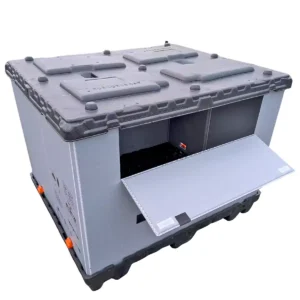
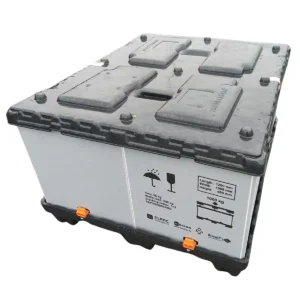
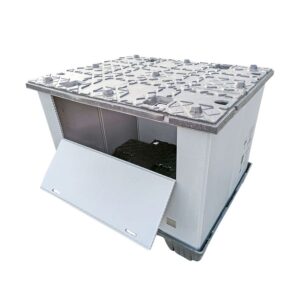
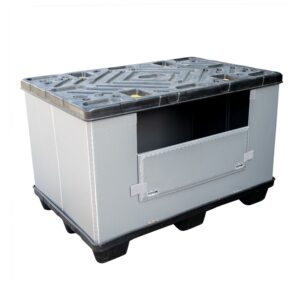
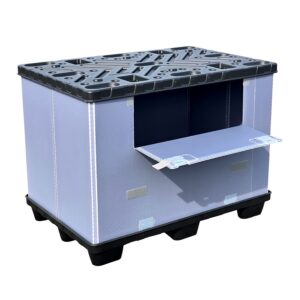
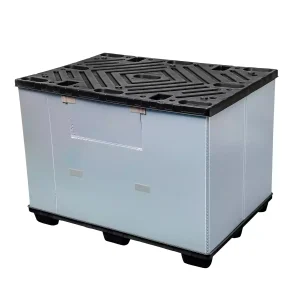
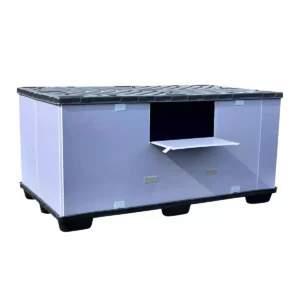
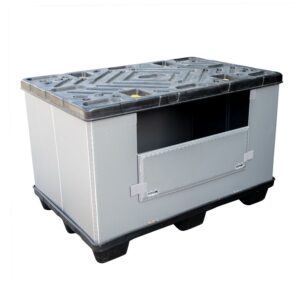
Among the different types of plastic pallet boxes, sleeve pack systemsare often the most efficient solution for returnable transport due to their high foldability and low return transport cost. Learn more in our Sleeve Pack Systems Guide →
Choosing the right transport packaging depends heavily on your logistics flow, handling requirements, and return systems. Below is a quick overview to help you identify the most suitable option based on your operational scenario.
Situation
Best option
High volume + return logistics
Sleeve packs
Mixed handling + flexibility
Foldable pallet boxes
FAQs About Plastic Pallet Boxes:
1. What is the difference between sleeve packs and foldable plastic pallet boxes?
Sleeve packs use a modular three-part construction - pallet, sleeve and lid - and are usually chosen where
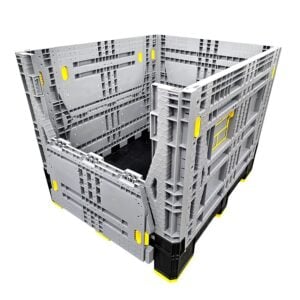
return transport efficiency is the main priority. Foldable plastic pallet boxes use integrated folding walls and
are often preferred where faster handling and higher built-in rigidity matter more. For automated systems,
both formats should be selected with skids to ensure stable conveyor and robotic handling.
2. Which type of plastic pallet box is usually the better long-term investment?
That depends on the logistics model rather than the purchase price alone. Sleeve packs often deliver the
strongest cost-per-cycle performance in high-volume return loops because they collapse more compactly.
Foldable plastic pallet boxes can be the better choice when operations value quicker setup, simpler daily
handling and robust repeat use. In automation, skid versions are the right specification for both.
3. Are these plastic pallet boxes suitable for automated or high-throughput operations?
Yes. Both sleeve packs and foldable plastic pallet boxes are used in automated logistics, but the exact base
design matters. Sleeve packs work well in standardised, repetitive flows, while foldable plastic pallet boxes
are often selected for mixed operations that still need stable geometry. The key rule is simple: choose skid-
based versions for automated systems, not flat-base variants.
4. How much space can collapsible plastic pallet boxes save in storage and return transport?
Space reduction depends on the system design. Sleeve packs typically achieve the highest collapse
efficiency and therefore the biggest savings in return transport and empty storage. Foldable plastic pallet
boxes also reduce volume substantially, but usually less aggressively than sleeve packs. This is why sleeve
packs are often favoured in long-distance return loops.
5. When do companies switch from cardboard or wooden packaging to plastic pallet boxes?
Companies usually switch when packaging is reused frequently, product protection must be more consistent,
and return logistics are available. In those conditions, reusable plastic pallet boxes can reduce recurring
packaging spend, improve handling consistency and lower waste output compared with one-way materials.
6. Can sleeve packs and foldable plastic pallet boxes be combined on one site or in one logistics system?
Yes. Many companies use sleeve packs for high-volume standard flows and foldable plastic pallet boxes for
product groups that need faster handling or a different box structure. This mixed approach can work very well,
provided the specification is controlled properly. Where automation is involved, select skid versions across the
relevant fleet to keep handling performance consistent.