Selecting the right returnable packaging system
Procurement guide for comparing reusable industrial packaging systems
Executive answer
The right returnable packaging system is not the strongest or cheapest container on paper. It is the system that protects the product, fits the handling process and produces a low lifecycle cost over repeated transport cycles. Sleeve pack pallet boxes deliver strong performance in standardised closed-loop flows where empty-return efficiency, clean handling and pallet-footprint consistency drive cost. Mesh wire pallet cages suit heavy or dirty metal parts where visibility and ventilation take priority. Reusable plywood crates are often the right call when enclosed protection or export-style product security is the main requirement.
Quick definitions for procurement teams
Use these terms consistently before comparing suppliers, quotations and logistics scenarios.
| Term | Practical meaning for this article |
|---|---|
| Returnable packaging system | A reusable packaging concept designed for repeated transport cycles between controlled locations. |
| Sleeve pack | A modular pallet box with pallet base, foldable sleeve wall and lid. Strong in closed-loop logistics where empty-return efficiency matters. |
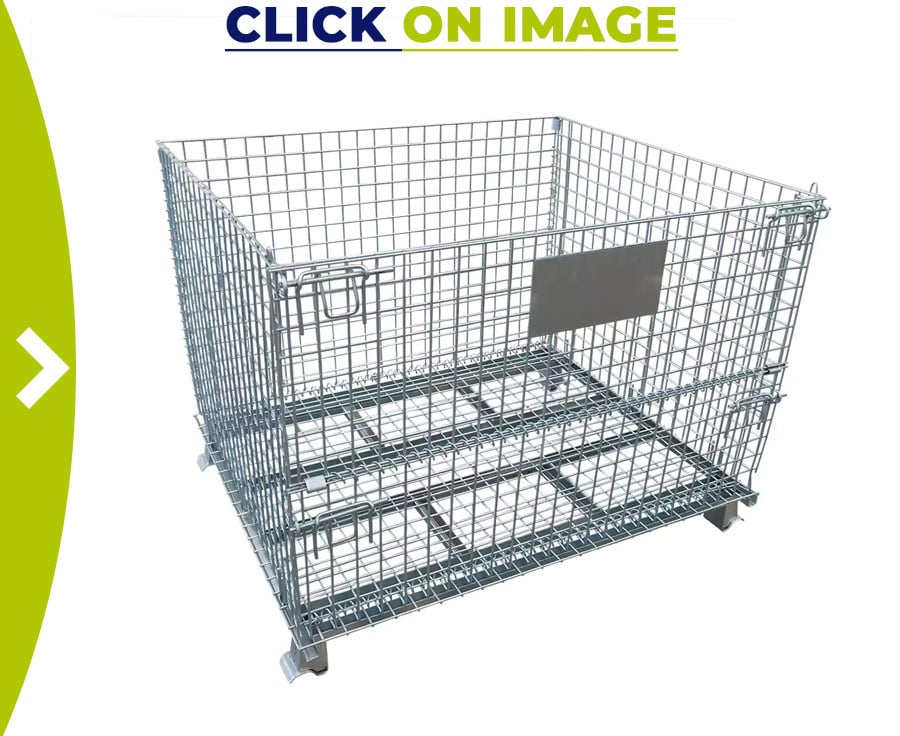
| Mesh wire pallet cage | A foldable steel cage with wire mesh sides. Strong for heavy, rough, visible or ventilated goods. |
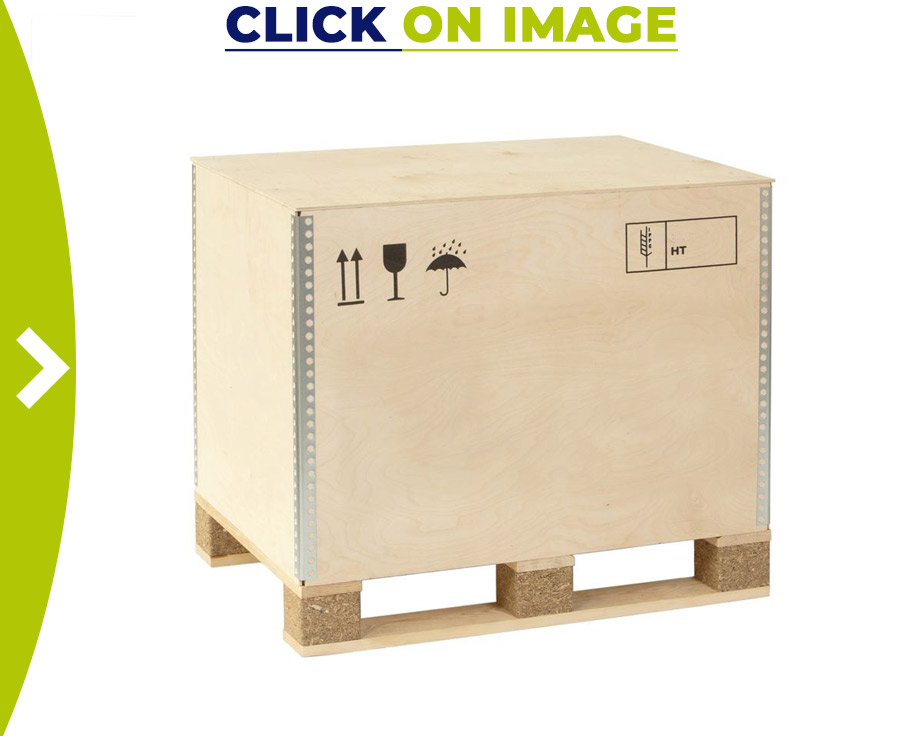
| Reusable plywood crate | A wooden or plywood crate system used where custom protection, export handling or irregular products dominate the decision. |
| Pool size | The total number of reusable units required to keep the flow running without shortages. |
| Cost per cycle | The real economic comparison: purchase cost, return freight, handling, repair, loss, cleaning and reuse cycles divided by usable trips. |
Table of contents
- Why packaging system selection is a procurement decision
- Step 1: Define the transport flow before choosing the container
- Step 2: Map the product characteristics
- Step 3: Compare sleeve packs, mesh wire pallet cages and plywood crates
- Step 4: Calculate lifecycle cost, not only purchase price
- Step 5: Match the packaging system to operations
- When sleeve packs are the best choice
- When mesh wire pallet cages are the best choice
- When reusable plywood crates are the best choice
- Procurement decision matrix
- Buyer checklist and supplier questions
- Key takeaways
- Related resources for the next step
- References and external standards
- Frequently asked questions
1. Why packaging system selection is a procurement decision
Transport cost, warehouse productivity, product damage and working capital all move when a company changes its packaging system. That is why packaging selection is a procurement decision, not a purchasing one – and why the container price on the quotation is rarely the number that matters most. What matters is how the system performs across hundreds of repeated cycles.
The question worth asking is not which container to buy. It is which packaging system delivers the lowest reliable cost per completed delivery cycle.
This is also relevant for compliance planning. Regulation (EU) 2025/40 on packaging and packaging waste places stronger emphasis on packaging waste prevention, reuse, recycling and lifecycle sustainability, so procurement should treat returnability as both a cost and future-readiness factor.
For procurement teams that need to understand how LCA, PPWR and CSRD specifically affect packaging decisions, see the lifecycle analysis guide for industrial reusable packaging.
Procurement principle
Choose the packaging around the logistics flow first, and around the product second. A strong container can still be the wrong system if it returns empty inefficiently, needs too much storage space or creates unnecessary handling steps.
| Business situation | Most likely best system | Why | Procurement warning |
|---|---|---|---|
| Closed-loop flow with regular empty returns | Sleeve pack pallet boxes | Strong fold ratio, clean pallet footprint and high standardisation potential. | Check the real cycle time and number of units needed in the pool. |
| Heavy metal parts, castings or rough industrial goods | Mesh wire pallet cages | Steel construction, visibility and ventilation make handling easier. | Lower empty-return efficiency can increase freight cost. |
| High-value, fragile or export-sensitive machinery parts | Reusable plywood crates | Enclosed protection and customisation options. | Often less efficient in empty return and harder to standardise. |
| Mixed supplier network with different product heights | Sleeve pack pallet boxes | Sleeve height and internal dunnage can be adapted while keeping the pallet footprint stable. | Avoid too many custom variants, or pool complexity increases. |
| Dirty, oily or wet parts where inspection is needed | Mesh wire pallet cages | Open sides support visibility, drainage and quick inspection. | Not ideal when contents must be protected from dust or weather. |
2. Step 1: Define the transport flow before choosing the container
The logistics flow is what makes or breaks the returnable packaging business case. All three systems can move product reliably – but their economics diverge sharply when the empty packaging needs to come back.
Procurement teams should first map the flow before comparing container specifications. The most important questions are:
- Is the transport flow closed-loop, semi-closed-loop or one-way?
- How often do empty units return, and how far do they travel?
- Can empty units be returned in full truckloads, or only in smaller LTL shipments?
- How long do containers remain at the customer, supplier or production site before returning?
- Are the same pallet footprints used across the network?
- Where the flow is built around Euro-pallet-compatible dimensions, the EPAL Euro pallet specification is a useful external reference for standard 800 x 1200 mm pallet compatibility and load-carrier expectations in European logistics.
- Is the flow stable enough to justify a dedicated returnable packaging pool?
- Are the containers handled by forklift, pallet truck, tugger train, automated line or manual operators?
Where the flow is repeated and return freight is a real cost, foldability stops being a feature and becomes a financial argument. A sleeve pack that collapses to a fraction of its loaded volume makes a measurable difference on every return truck.
| Flow factor | Why it matters | Sleeve pack implication | Buyer action |
|---|---|---|---|
| Return distance | Longer return distances increase the value of collapsed empty transport. | High positive impact when sleeves, pallets and lids nest or stack efficiently. | Calculate return transport cost per cycle, not only outbound cost. |
| Cycle time | Longer dwell time increases the number of units required in the pool. | More containers are needed if customers hold packaging too long. | Define ownership, return rules and allowed dwell time. |
| Truck fill | Poor empty-return density can destroy the ROI of a reusable system. | Sleeve packs often outperform rigid systems and many steel alternatives on empty return. | Compare full, loaded and folded truck quantities. |
| Flow stability | Returnable systems need repeat use to pay back. | Best for stable routes, OEM loops, supplier loops and intercompany flows. | Avoid over-investing in highly irregular lanes. |
| Handling standardisation | Different forklifts, racking and loading patterns create hidden cost. | Standard pallet footprints are a major advantage. | Confirm compatibility before purchase. |
3. Step 2: Map the product characteristics
After the transport flow is clear, the product characteristics determine the container design. This is where many buying mistakes happen. A procurement team may choose a strong container, but the product may still need dunnage, drop doors, a different sleeve height, a reinforced pallet base or a different access method.
| Product characteristic | What to check | Typical packaging implication |
|---|---|---|
| Weight | Gross load per unit, point loads and stacking loads. | Heavy loads may require reinforced sleeve packs, steel mesh cages or custom crates. |
| Dimensions | Length, width, height and tolerance around the product. | Standard footprints reduce cost, but oversized parts may need plywood crates or special frames. |
| Fragility | Sensitivity to impact, vibration, compression or surface damage. | Sleeve packs with dunnage or plywood crates can outperform open mesh cages. |
| Visibility requirement | Whether operators must inspect contents without opening the container. | Mesh wire pallet cages are often preferred when visual inspection is important. |
| Cleanliness requirement | Dust, moisture, oil, contamination or food-adjacent requirements. | Closed sleeve packs or crates protect better than open cages. |
| Fill-height variation | Whether shipment height changes between batches. | Sleeve packs are strong when variable fill height can be managed with sleeve height or dunnage. |
| Stackability | Loaded and empty stacking requirements in warehouse and truck. | Confirm dynamic stack load, warehouse stack load and transport stack pattern. |
| Ergonomics | Manual access, drop doors, picking access and operator safety. | Drop doors, removable lids, open fronts or fold-down sides may be needed. |
For sleeve pack procurement, three specifications should be checked early: pallet footprint, sleeve height and expected dynamic load. These determine whether the system can be standardised across lanes or whether special variants are required.
For broader reusable plastic distribution box classification, ISO 18616-1:2016 describes reusable rigid plastic box types such as stackable, foldable, nestable and nestable-stackable boxes, while ISO 18616-2:2016 covers general testing specifications for handling and managing reusable rigid plastic distribution boxes.
4. Step 3: Compare sleeve packs, mesh wire pallet cages and plywood crates
Choosing between these three systems is not a materials comparison. It is a logistics and operations decision. Each system was designed around different constraints, and the right choice shifts depending on what those constraints are in your flow.
| Packaging system | What it is | Main strengths | Main limitations | Best-fit applications |
|---|---|---|---|---|
| Sleeve pack pallet boxes | A modular system with pallet base, foldable sleeve wall and removable lid, usually in standard industrial footprints. | High empty-return efficiency, clean appearance, good standardisation, flexible internal dunnage options and strong suitability for closed-loop logistics. | Lower content visibility than mesh cages; lid and sleeve management must be controlled; not always ideal for very sharp or extremely heavy parts without reinforcement. | Automotive components, electronics, plastic components, supplier loops, intercompany flows, retail and clean industrial transport. |
| Mesh wire pallet cages | Foldable steel cages with wire mesh sides and pallet-compatible base. | Strong construction, good ventilation, high visibility, robust handling and good fit for heavy industrial goods. | Usually lower empty-return density than sleeve packs; open sides offer less protection from dust, moisture and small-part loss. | Metal components, castings, machined parts, recycling flows, production supply and rough industrial environments. |
| Reusable plywood crates | Reusable wooden or plywood transport crates, often customised for product protection. | Good enclosed protection, strong customisation options, suitable for high-value or export-sensitive goods. | Often heavier, less collapsible and less standardised; can create higher storage and return cost. | Machinery parts, export shipments, fragile equipment, long goods and high-value components. |
| Performance factor | Sleeve packs | Mesh wire pallet cages | Reusable plywood crates | Procurement interpretation |
|---|---|---|---|---|
| Empty return efficiency | High | Medium | Low to medium | Important when return distance or return frequency is high. |
| Product protection | Medium to high | Medium | High | Depends on dunnage, lid, enclosure and fragility. |
| Visibility of contents | Low | High | Low | Visibility matters for inspection, production staging and inventory checks. |
| Cleanliness and dust protection | High when closed with lid | Low to medium | High | Relevant for clean industrial goods or sensitive components. |
| Heavy-load robustness | Medium to high | High | Medium to high | Confirm load ratings and real handling conditions. |
| Standardisation potential | High | High | Medium | Standardisation reduces pool complexity and replacement cost. |
| Internal dunnage options | High | Medium | High | Critical for fragile or separated components. |
| Export suitability | Good in reusable closed-loop export flows | Medium | High | Crates may still be preferred for one-way or irregular export. |
| Visual brand impression | High | Medium | Medium | Relevant for customer-facing or high-value B2B flows. |
5. Step 4: Calculate lifecycle cost, not only purchase price
Buying on purchase price alone is one of the most common mistakes in returnable packaging procurement. The correct comparison is total cost per usable cycle: container investment, expected reuse trips, return transport, warehouse storage, labour, cleaning, repair, losses and damage prevention. A container that costs 30% more but runs twice as many cycles is often the cheaper choice.
The upfront investment in sleeve packs is higher than one-way packaging. That gap closes faster than most buyers expect – and eventually reverses. Every completed return trip reduces the effective cost per cycle, and every collapsed return truck replaces the cost of buying and disposing of another round of one-way packaging.
After this first comparison, validate the business case with the returnable packaging ROI calculator. When sleeve packs are the preferred option, use the sleeve pack ROI calculator to test payback time, annual savings and required investment.
For a detailed breakdown of every cost component – depreciation, return freight, handling, cleaning, repair and disposal – see the sleeve pack cost per cycle guide, which models the full lifecycle cost with verified figures.
| Cost driver | What procurement should calculate | Why it changes the decision |
|---|---|---|
| Purchase price | Cost per container, including pallet, sleeve, lid and accessories. | Important for cash flow, but not enough to determine true cost. |
| Expected reuse cycles | Realistic number of completed trips before replacement. | Higher reuse cycles reduce cost per cycle. |
| Empty-return transport | Cost per return truck, return distance and number of collapsed units per truck. | Often the biggest advantage of sleeve packs in closed-loop flows. |
| Pool size | Number of units required to keep the flow running. | Long dwell time or slow returns increase investment. |
| Repair and maintenance | Replacement of sleeves, lids, pallets, hinges, doors or dunnage. | Modular systems can reduce full-container replacement cost. |
| Loss and damage rate | Units lost, stolen, damaged or not returned. | Requires tracking, labelling and return agreements. |
| Warehouse storage | Space needed for full and empty units. | Folded storage density can reduce warehouse cost. |
| Handling time | Opening, folding, stacking, cleaning and loading time. | A cheap system can become expensive if it slows operations. |
ROI logic for sleeve packs
Sleeve packs typically produce the best ROI when three conditions align: the flow repeats on a regular schedule, the empty return distance is meaningful, and one-way packaging cost is high enough to replace. Where the flow is irregular or packaging is not returned reliably, the payback case weakens significantly.
6. Step 5: Match the packaging system to operations
A returnable packaging system must work in daily operations, not only in a procurement spreadsheet. Buyers should validate the container against warehouse layout, forklift type, loading pattern, racking, picking access, cleaning process and tracking method.
Where reusable packaging is shared between locations or customers, define cleaning, sanitation and asset identification rules early. ISO/TS 22984:2021 gives guidance for cleaning and sanitation of reusable transport items, and the GS1 Global Returnable Asset Identifier can be used to identify and track returnable assets across supply-chain processes.
| Operational requirement | Questions to ask | System impact |
|---|---|---|
| Forklift and pallet-truck compatibility | Can operators move the unit safely from all required sides? | Standard sleeve packs and mesh cages usually perform well, but foot design and pallet base matter. |
| Truck loading pattern | How many loaded and folded units fit in a truck? | Determines outbound efficiency and return transport economics. |
| Stacking during transport | Can units be stacked loaded, and under which load conditions? | Affects truck utilisation and product safety. |
| Warehouse stacking | How many units can be stored safely when loaded and when empty? | Impacts floor space, safety and peak-season buffer. |
| Picking or line-side access | Do operators need drop doors, removable sides or open visibility? | Mesh cages or sleeve packs with drop doors may be required. |
| Cleaning and maintenance | Can the system be cleaned, repaired and inspected efficiently? | Important for closed-loop durability and hygiene-sensitive flows. |
| Tracking and ownership | How will units be identified, returned and controlled? | Labels, numbering, barcodes or RFID can reduce loss and disputes. |
7. When sleeve packs are the best choice
Transport efficiency and standardisation are where sleeve packs often outperform the alternatives. For procurement teams running repeated flows between suppliers, plants, distribution centres or customers, sleeve packs are a strong starting point unless a specific product or handling requirement points elsewhere.
A sleeve pack system normally consists of three main components:
- a pallet base, usually plastic or heavy-duty returnable material;
- a foldable sleeve wall, commonly used to create the box structure;
- a removable lid that protects the product and supports stacking.
Because the system collapses for empty return while delivering a fully closed box format under load, sleeve packs often outperform rigid containers and open mesh cages on lifecycle cost in closed-loop industrial flows.
| Sleeve pack is a strong fit when... | Why this matters |
|---|---|
| The flow is closed-loop or semi-closed-loop. | Reusable packaging only creates strong ROI when units come back predictably. |
| Empty returns are expensive. | Folded sleeve packs can reduce return truck requirements compared with rigid or low-fold-ratio systems. |
| The pallet footprint can be standardised. | Standardisation reduces SKU complexity, repair stock and supplier confusion. |
| Products need enclosed protection but not full wooden crating. | Sleeve packs protect better than open mesh cages while remaining more return-efficient than many crates. |
| Internal dunnage is needed. | Sleeve packs can combine external box structure with custom internal separation. |
| The company wants a cleaner, more professional packaging system. | Uniform, branded returnable boxes reduce handling errors at the customer site and present a more professional image than mixed or one-way packaging. |
| There are repeated shipments to the same customers or plants. | Repeated cycles shorten payback and improve pool utilisation. |
Buyer considerations for sleeve packs
- Do not compare sleeve packs only against one-way packaging purchase price. Compare cost per cycle.
- Check the full system price: pallet, sleeve, lid, dunnage, labels and replacement parts.
- Define whether sleeves and lids will be returned together, nested separately or mixed with outbound freight.
- Confirm loaded stacking and folded stacking rules with the supplier.
- Avoid too many sleeve sizes unless there is a clear operational reason.
- Plan ownership, cleaning, repair and loss control before launch.
For the full sleeve-specific buying framework, continue with the sleeve pack systems guide. To compare available sizes and configurations, view the sleeve pack pallet boxes range.
8. When mesh wire pallet cages are the best choice
In rough industrial environments, mesh wire pallet cages are the practical choice. Steel construction handles heavy loads, oily parts and demanding handling conditions that would wear down plastic systems. The open mesh sides mean operators can check contents without opening the container – a genuine time-saver on busy production lines and inbound docks.
| Mesh cage is a strong fit when... | Why this matters |
|---|---|
| The product is heavy, oily, dirty or rough. | Steel construction and open sides tolerate demanding production environments. |
| Operators need to inspect contents quickly. | Wire mesh sides make contents visible without opening the container. |
| Ventilation or drainage is important. | Open construction can be useful for wet, oily or heat-sensitive parts. |
| The packaging is used mainly inside production or supplier loops. | Durability and visibility may matter more than empty-return density. |
| Product protection requirements are moderate. | Open cages are less suitable for dust-sensitive or fragile goods without additional protection. |
The trade-off to model carefully is empty-return density. Even foldable mesh cages do not collapse as compactly as sleeve pack systems. On long return routes, that difference in truck fill can shift the cost comparison materially – so run the numbers before committing to steel over plastic.
For a deeper alternative analysis, compare this article with the mesh wire pallet cages guide.
9. When reusable plywood crates are the best choice
When the product sets the rules rather than the logistics flow, reusable plywood crates earn their place. Machinery components, long goods, fragile assemblies and high-value parts that cannot be standardised into a pallet-box footprint are exactly where custom plywood construction makes sense. Protection takes priority; fold ratio is a secondary concern.
| Plywood crate is a strong fit when... | Why this matters |
|---|---|
| The product is fragile, high-value or irregularly shaped. | Custom internal support can reduce damage risk. |
| The shipment is export-oriented or irregular. | Crates can be easier to justify when return loops are uncertain or protection dominates. |
| The product needs enclosed protection from all sides. | Plywood provides a more robust enclosure than open mesh systems. |
| The product does not fit standard pallet box dimensions. | Custom crate design can support unusual lengths, heights or load points. |
| The packaging cost is small compared with damage risk. | For expensive machinery, avoiding one damage incident can outweigh freight inefficiency. |
The trade-off is real: plywood crates are heavier, fold less efficiently and are harder to standardise across a network. In a high-frequency closed-loop where return cost and pool simplicity drive the economics, they are usually the wrong starting point.
For export or high-protection alternatives, compare current plywood crate options before choosing a reusable closed-loop packaging pool.
10. Procurement decision matrix
The table below gives a practical decision framework for procurement teams comparing returnable packaging systems. It should be used as a first filter before running a detailed cost calculation or pilot test.
For a more detailed head-to-head comparison of sleeve packs and FLCs specifically – covering load capacity, automation fit and collapsed height – see the sleeve pack vs FLC comparison guide.
| Scenario | Best first-choice system | Alternative to evaluate | Reasoning |
|---|---|---|---|
| Automotive supplier delivering repeated components to the same plant | Sleeve pack pallet boxes | Mesh wire pallet cages | Sleeve packs usually offer better empty-return economics and cleaner standardisation. |
| Supplier shipping heavy castings or metal parts | Mesh wire pallet cages | Sleeve packs with reinforcement | Steel cages handle rough loads and allow visibility. |
| Electronics or plastic components with surface protection needs | Sleeve pack pallet boxes | Reusable plywood crates | Closed sleeve packs with dunnage can protect well without full crate complexity. |
| Machinery parts for irregular export shipments | Reusable plywood crates | Sleeve packs for repeatable export loops | Protection and customisation may outweigh return efficiency. |
| High-volume closed-loop flow with long empty return distance | Sleeve pack pallet boxes | Mesh cages only if heavy loads require steel | Folded return density is a major cost driver. |
| Production-side storage where contents must be visible | Mesh wire pallet cages | Sleeve packs with labelling or transparent process controls | Visibility reduces search time and handling errors. |
| Mixed product heights on the same pallet footprint | Sleeve pack pallet boxes | Plywood crates for special items | Sleeve systems can standardise the base while adapting height and dunnage. |
11. Buyer checklist and supplier questions
Before selecting a returnable packaging system, procurement should align purchasing, logistics, operations, quality and finance. The checklist below helps prevent a low-price buying decision from becoming a high-cost operational problem.
| Checklist item | Question to answer | Why it matters |
|---|---|---|
| Transport flow | Is the flow repeated, stable and returnable? | Determines whether reusable packaging can pay back. |
| Cycle time | How many days does one full cycle take? | Determines required pool size and investment. |
| Return method | Are empties returned FTL, LTL or mixed with outbound freight? | Determines empty-return cost. |
| Container capacity | How many full and folded units fit per truck? | Determines logistics efficiency. |
| Product fit | Does the product need dunnage, drop doors or special support? | Prevents damage and handling problems. |
| Stacking rules | What is allowed loaded, empty, in warehouse and in truck? | Controls safety and transport planning. |
| Repairability | Can components be replaced separately? | Reduces lifecycle cost. |
| Cleaning | Can the system be cleaned efficiently? | Important for quality-sensitive flows. |
| Tracking | How will units be identified and returned? | Reduces losses and customer disputes. |
| Pilot test | Can the system be tested on one lane before rollout? | Validates assumptions before full investment. |
Supplier questions before ordering
- What are the exact internal and external dimensions of the complete system?
- What are the loaded stack, dynamic load and warehouse stack limits?
- How many loaded units fit in a standard truck, and how many folded units fit on return?
- Which components are replaceable separately: pallet, sleeve, lid, doors, hinges, label holders or dunnage?
- Can the supplier support both new and used units, repair parts and future expansion of the pool?
- What customisation options are available without creating unnecessary complexity?
- Can the supplier help calculate ROI, payback time and pool size based on real cycle data?
- What is the expected lead time, minimum order quantity and spare-part availability?
12. Key takeaways
- The right returnable packaging system is chosen by lifecycle cost, not by purchase price alone.
- In standardised closed-loop flows, sleeve pack pallet boxes consistently deliver the lowest lifecycle cost when empty-return efficiency is a significant cost driver.
- Heavy, rough or oily industrial goods – where operators need to see contents without opening the container – are where mesh wire pallet cages earn their cost.
- Custom protection and export-style security point to reusable plywood crates, particularly for irregular, high-value or fragile goods that do not fit a standard footprint.
- Procurement should calculate transport flow, cycle time, pool size, return method, reuse cycles, repairs and loss control before ordering.
- Before committing the full pool investment, run a controlled pilot on one representative lane. Real cycle data will often reveal assumptions that the spreadsheet missed.
13. Related resources for the next step
Use the resources below to move from system selection into sizing, cost validation and supplier comparison.
| Buyer question | Recommended next page | Why this is the right next step |
|---|---|---|
| Do sleeve packs fit our logistics flow? | sleeve pack systems guide | Use after this article when sleeve packs appear to be the strongest system. |
| Which sleeve pack size or configuration should we request? | sleeve pack pallet boxes | Use when the buyer wants actual sizes, load ratings and quote options. |
| Will reusable packaging pay back financially? | returnable packaging ROI calculator | Use when comparing one-way packaging with reusable alternatives. |
| How many units do we need in the pool? | returnable packaging pool size calculator | Use when the buyer knows shipment frequency, distance and dwell time. |
| Are heavy visible goods better in steel cages? | mesh wire pallet cages guide | Use when strength, visibility or ventilation may outweigh fold ratio. |
| Is export protection more important than return efficiency? | plywood crate options | Use when custom protection, one-way export or irregular shipments dominate. |
| Do we need specialist advice before a quotation? | Contact ZAMKO | Use when product fit, return flow or pool size needs validation. |
14. References and external standards
These external references support the standards, compliance and operational points used in this guide. They are authoritative sources, not competitor supplier links.
- Regulation (EU) 2025/40 on packaging and packaging waste – reference for European packaging waste, reuse, recycling and lifecycle requirements.
- ISO 18616-1:2016 – reusable rigid plastic distribution boxes – reference for reusable plastic box types and general returnable transport system terminology.
- ISO 18616-2:2016 – testing specifications for reusable rigid plastic distribution boxes – reference for test methods used when validating handling and management of reusable boxes.
- ISO/TS 22984:2021 – cleaning and sanitation of reusable transport items – reference for cleaning and sanitation procedures in reusable transport packaging operations.
- GS1 Global Returnable Asset Identifier (GRAI) – reference for identifying and tracking reusable transport assets.
- EPAL Euro pallet specification – reference for Euro-pallet dimensions, load-carrier specifications and European pallet standardisation.
15. Frequently asked questions
What is the best returnable packaging system for closed-loop industrial transport?
In most standardised closed-loop flows, sleeve packs are usually a strong starting point. They combine a standard pallet footprint with enclosed product protection and – critically – a fold ratio that keeps return freight costs under control. If the same packaging moves repeatedly between two or three known locations, sleeve packs will often produce a lower cost per cycle.
When should a company choose sleeve packs instead of mesh wire pallet cages?
The decision point is visibility versus return cost. If operators need to see inside the container without opening it, mesh cages have the advantage. Outside strong visibility-driven cases – for example automotive components, electronics, clean plastic parts and supplier loops – sleeve packs can protect the product, standardise the footprint and often return at lower freight cost than steel alternatives.
When are mesh wire pallet cages better than sleeve packs?
Steel cages make sense when the product is heavy, rough, oily or needs fast visual inspection without opening the container. The open mesh sides and robust construction handle conditions that wear down plastic systems quickly. That said, always run the return-freight numbers: the lower fold ratio of most mesh cages means they cost more per empty return trip than sleeve packs, and that difference adds up on longer routes.
When should reusable plywood crates be used?
When the product cannot be standardised into a pallet box – machinery parts, long goods, fragile assemblies, high-value components – plywood crates are often the right tool. They can be built to fit the product rather than the other way around. In those situations, the cost of one damage claim typically outweighs months of return freight inefficiency.
What is the most important cost driver when choosing returnable packaging?
Purchase price is the most visible number, but it is not the most important one. The number that actually determines value is cost per completed cycle – which includes amortisation of the container investment, return transport, handling time, cleaning, repair, asset losses and damage prevention. A container that looks expensive on the invoice can be the cheapest option per trip by a significant margin.
How do empty returns affect the ROI of reusable packaging?
Empty-return cost is frequently the factor that makes or breaks the business case. A system that collapses well reduces the number of return trucks needed, which directly cuts cost per cycle. As an illustrative example, on a 500 km return route, the difference between fitting 20 versus 60 collapsed units per truck is not marginal – it can change the entire economics of the project. This is why sleeve packs perform so strongly in high-frequency or long-distance loops.
How many returnable packaging units does a company need?
Pool size is one of the most underestimated variables in returnable packaging projects. Shipment volume, cycle time, how long the customer holds the packaging before returning it, return frequency, repair reserve and a seasonal buffer all feed into the calculation. Order too few and the flow breaks down; order too many and capital sits idle in a yard. Use the pool size calculator before placing any order – the inputs are straightforward and the output may surprise you.
Should procurement choose the cheapest container or the lowest cost per cycle?
Buy on cost per cycle, not on unit price. A sleeve pack that folds for return, lasts many repeated trips and needs only occasional part replacement is often cheaper over its lifetime than a one-way alternative that looks less expensive on the invoice. The purchase price is just the entry point – the real cost accumulates across every trip, every return truck and every replacement order. Use the returnable packaging ROI calculator to compare the full picture for your specific flow.
FAQ
What is the best returnable packaging system for closed-loop industrial transport?
In most standardised closed-loop flows, sleeve packs are usually a strong starting point. They combine a standard pallet footprint with enclosed product protection and – critically – a fold ratio that keeps return freight costs under control. If the same packaging moves repeatedly between two or three known locations, sleeve packs will often produce a lower cost per cycle.
When should a company choose sleeve packs instead of mesh wire pallet cages?
The decision point is visibility versus return cost. If operators need to see inside the container without opening it, mesh cages have the advantage. Outside strong visibility-driven cases – for example automotive components, electronics, clean plastic parts and supplier loops – sleeve packs can protect the product, standardise the footprint and often return at lower freight cost than steel alternatives.
When mesh wire pallet cages better than sleeve?
Steel cages make sense when the product is heavy, rough, oily or needs fast visual inspection without opening the container. The open mesh sides and robust construction handle conditions that wear down plastic systems quickly. That said, always run the return-freight numbers: the lower fold ratio of most mesh cages means they cost more per empty return trip than sleeve packs, and that difference adds up on longer routes.
How many returnable packaging units does a company need?
Pool size is one of the most underestimated variables in returnable packaging projects. Shipment volume, cycle time, how long the customer holds the packaging before returning it, return frequency, repair reserve and a seasonal buffer all feed into the calculation. Order too few and the flow breaks down; order too many and capital sits idle in a yard. Use the pool size calculator before placing any order – the inputs are straightforward and the output may surprise you.
When should reusable plywood crates be used?
When the product cannot be standardised into a pallet box – machinery parts, long goods, fragile assemblies, high-value components – plywood crates are often the right tool. They can be built to fit the product rather than the other way around. In those situations, the cost of one damage claim typically outweighs months of return freight inefficiency.
What is the most important cost driver when choosing returnable packaging?
Buy on cost per cycle, not on unit price. A sleeve pack that folds for return, lasts many repeated trips and needs only occasional part replacement is often cheaper over its lifetime than a one-way alternative that looks less expensive on the invoice. The purchase price is just the entry point – the real cost accumulates across every trip, every return truck and every replacement order. Use the returnable packaging ROI calculator to compare the full picture for your specific flow.
How do empty returns affect the ROI of reusable packaging?
Empty-return cost is frequently the factor that makes or breaks the business case. A system that collapses well reduces the number of return trucks needed, which directly cuts cost per cycle. As an illustrative example, on a 500 km return route, the difference between fitting 20 versus 60 collapsed units per truck is not marginal – it can change the entire economics of the project. This is why sleeve packs perform so strongly in high-frequency or long-distance loops.
Should procurement choose the cheapest container or the lowest cost per cycle?
Buy on cost per cycle, not on unit price. A sleeve pack that folds for return, lasts many repeated trips and needs only occasional part replacement is often cheaper over its lifetime than a one-way alternative that looks less expensive on the invoice. The purchase price is just the entry point – the real cost accumulates across every trip, every return truck and every replacement order. Use the returnable packaging ROI calculator to compare the full picture for your specific flow.
Table of Contents
Toggle